🔆Levita Magnetics Robotics: Rewriting the Physics of Surgery for Africa’s Next Healthcare Era.
The greatest surgical breakthroughs rarely begin with a new instrument.
They begin with a new way of thinking.
For decades, surgery has relied on a simple rule: every organ that needs exposure requires another incision, another instrument, another pair of hands. Magnetic-assisted robotic surgery challenges that assumption entirely. After years watching surgery evolve from open approaches to laparoscopy and then to robotics, considering the arrival of magnetic robotics one of the most intellectually important shifts in minimally invasive surgery.
The work pioneered by Levita Magnetics does not attempt to replace surgeons. It changes how forces inside the body are controlled , and that change has enormous implications for Africa.
🔆Clinical Evidence: What the Research Is Actually Showing.
Early prospective clinical trials involving magnetic surgical systems demonstrated safe and effective reduced-port laparoscopic procedures, with successful outcomes and no device-related serious adverse events in proof-of-concept studies. (PubMed)
Subsequent reports in robotic-assisted surgery describe how magnetic retractors can reduce the need for additional ports while maintaining operative exposure, allowing surgeons to complete procedures with fewer incisions and no increase in complications. (PubMed)
More recent real-world clinical adoption highlights continued expansion, including over 1,000 completed procedures using the FDA-cleared MARS system and broader indications such as bariatric and hiatal hernia surgery. (Levita Magnetics)
What does this evidence suggest in practical terms?
✅Fewer incisions for patients
✅Improved visualization through magnetic organ retraction
✅Reduced instrument crowding in the operating field
✅Potentially faster recovery and reduced postoperative pain
✅Greater independence for the primary surgeon during procedures
This is not robotics for prestige. This is robotics that removes friction from surgery itself.
🔆Why Magnetic Robotics Changes the Surgical Equation
Traditional robotic systems add mechanical arms.
Magnetic robotics changes internal anatomy without adding external complexity.
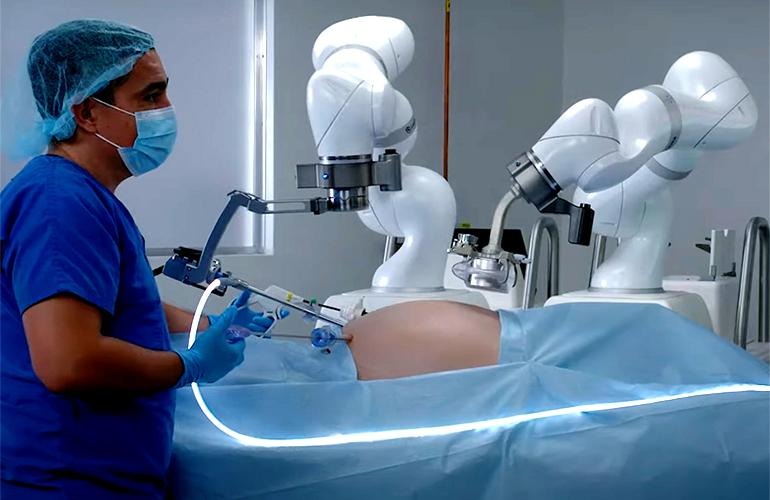
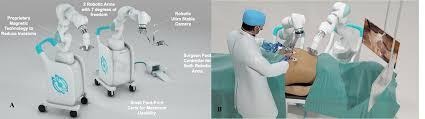
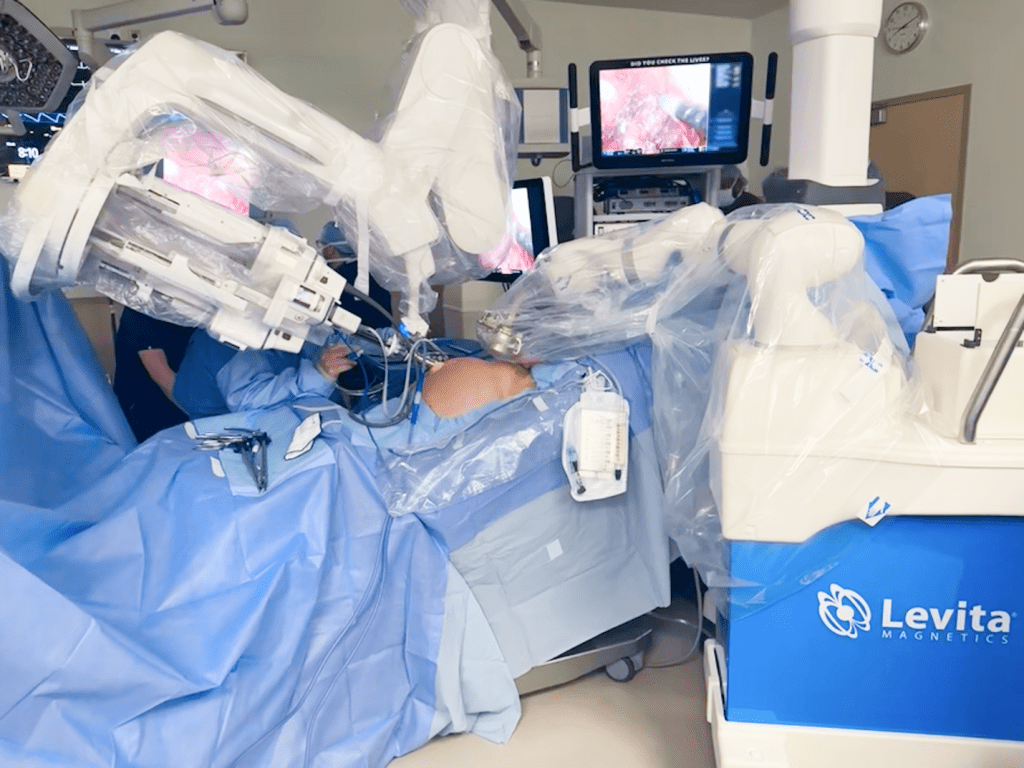
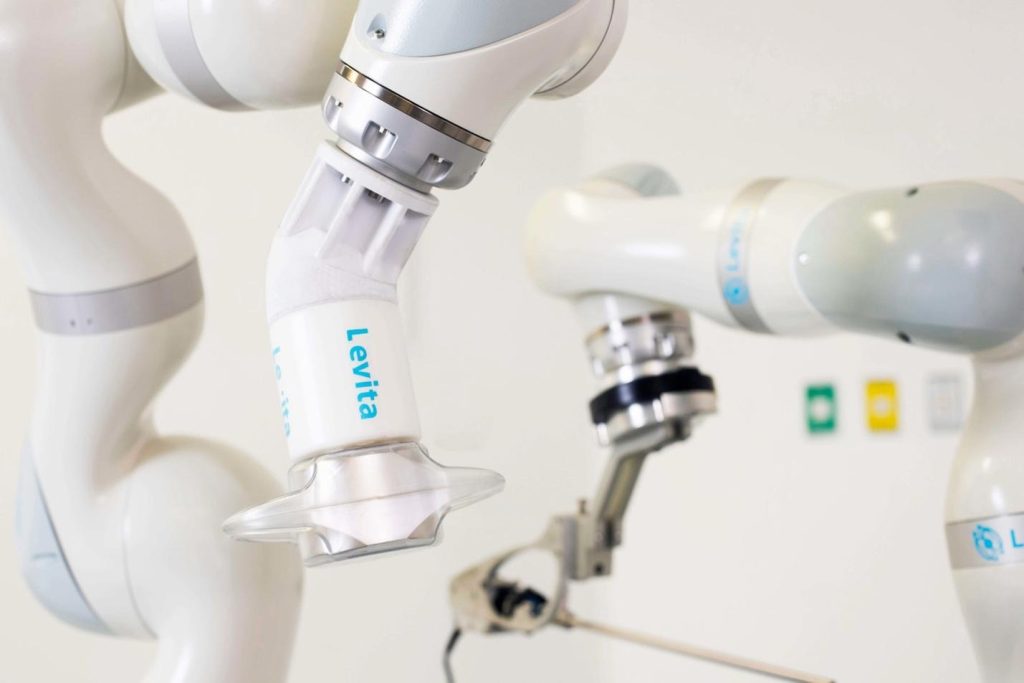
The MARS platform allows surgeons to manipulate tissue using external magnetic control rather than additional trocars. This seemingly simple idea produces profound clinical consequences:
👉🏻Less trauma to abdominal walls
👉🏻Cleaner operating fields
👉🏻Shorter recovery periods
👉🏻Reduced scarring
And perhaps most importantly :fewer required assistants in certain workflows, improving operating theatre efficiency. (medtechdive.com)
For hospitals managing high patient volumes with limited staff, this matters enormously.
🔆Why This Matters for Nigeria and Africa
African healthcare systems face a unique challenge: rising demand for complex surgery alongside limited specialist availability and high pressure on theatre resources.
Magnetic-assisted robotics aligns with these realities in several ways:
✅ Reduced-Port Surgery Means Faster Recovery
Shorter admissions free beds faster ; a major advantage in crowded tertiary hospitals.
✅ Simpler Workflow Supports Training
Surgeons transitioning from conventional laparoscopy can adapt without undergoing the steep learning curves associated with larger robotic systems.
✅ Lower Infrastructure Burden
Compact platforms designed for outpatient and high-volume procedures reduce the need for costly operating room modifications. (Levita Magnetics)
✅Better Patient Experience
Less pain and improved cosmetic outcomes increase patient acceptance of minimally invasive surgery.
The Return on Investment That Boards Understand
Hospitals do not thrive on technology alone. They thrive on outcomes that improve financial stability.
Magnetic-assisted robotics creates measurable economic value through:
✅Increased case turnover per operating day
✅Reduced complication-related costs
✅Lower personnel dependency in specific procedures
✅Attraction of privately insured and international patients
✅Growth of ambulatory and same-day surgery models
When surgeries become less invasive and more predictable, hospitals generate both clinical credibility and revenue resilience.
🔆Why Phinnastads Biomedical Ltd Holds a Strategic Advantage.
Technology does not succeed because it is advanced. It succeeds because it is understood.
Phinnastads Biomedical Ltd occupies an unusual and powerful position:
✅Biomedical engineering expertise grounded in clinical realities
✅Understanding of African healthcare infrastructure limitations
✅Ability to translate complex technology into practical workflow adoption
✅Existing credibility among healthcare professionals and decision-makers
This intersection of engineering knowledge and clinical understanding is precisely what global robotics companies look for when entering emerging markets.
Phinnastads is positioned not merely as a supplier ,but as a builder of surgical ecosystems.
🔆A Message to Global Robotics Companies and Emerging Startups
Africa represents one of the fastest-growing surgical markets in the world.
Partnership with clinically informed regional organizations creates:
✅Faster adoption pathways
✅Credible local training networks
✅Stronger regulatory navigation
✅Sustainable long-term system usage
Those who enter early will shape surgical standards for decades.
🔆The Bigger Vision: Magnetic Surgery as a Bridge Technology.
The future of surgery is not necessarily larger robots ; it may be smarter, more precise tools that reduce invasiveness without increasing complexity.
Magnetic robotics sits precisely at this intersection:
✅Advanced yet practical
✅Innovative yet financially sensible
✅Powerful without requiring massive infrastructure investment
For Africa, this could represent a true leap forward rather than incremental progress.
Magnetic-assisted robotics is one of those rare innovations that changes not only technique ;but philosophy.
For Nigeria and Africa, the opportunity is clear:
👉🏻Better outcomes for patients
👉🏻Greater efficiency for hospitals
👉🏻Stronger competitiveness for healthcare systems
👉🏻A pathway for global partnerships rooted in real clinical value
And for Phinnastads Biomedical Ltd, this moment is about leadership ; helping shape the future of surgical care across the continent.
#Levitamagneticsrobotic #Surgicalrobotics #Medicaltechnology #Roboticsurgery #Magneticsurgery #Healthcareinnovation #Africanhealthcare #Minimallyinvasivesurgery #Clinicalexcellence #Futureofsurgery #Phinnastadsbiomedicalltd
High-Impact Lines Designed to Capture Attention
The best incision is the one you never make,Magnetic surgery changes force into precision. The Less the hardware inside the body, more control for the surgeon surface.Hospitals that adopt smarter surgery today become tomorrow’s reference centers. Innovation is not about bigger machines ;it is about better outcomes.
🔆The future of minimally invasive surgery may not be bigger robots but smarter physics.
Clinical research in high-impact surgical journals continues to show that reducing tissue trauma, improving visualization, and simplifying workflow are key drivers of better outcomes. Magnetic-assisted robotic surgery, exemplified by the MARS platform from Levita Magnetics, introduces a new paradigm: controlling internal anatomy through magnetic force rather than adding more incisions.
Why this matters for Nigeria and Africa:
✅ Fewer incisions can mean faster recovery and shorter hospital stays
✅Improved operating field visibility supports surgical precision
✅Reduced instrument crowding improves workflow efficiency
✅Practical deployment makes advanced surgery more accessible to emerging healthcare systems
✅Enhanced patient experience strengthens hospital competitiveness
For healthcare leaders, the discussion is no longer about adopting technology for appearance ; it is about measurable clinical outcomes and sustainable financial returns.
Phinnastads Biomedical Ltd combines biomedical engineering insight with clinical understanding, creating a bridge between advanced surgical innovation and real operating-room adoption across African healthcare systems.
The next era of surgery will belong to institutions that choose precision early.
💬 How should African hospitals prepare for magnetic and robotic surgery innovation?
#Levitamagneticsrobotic #Surgicalrobotics #Medicaltechnology #Roboticsurgery #Magneticsurgery #Healthcareinnovation #Africanhealthcare #Minimallyinvasivesurgery #Clinicalexcellence #Futureofsurgery #Phinnastadsbiomedicalltd
Recent Posts
-
 🚨 THE ROBOT THAT OPERATES WHERE HUMAN HANDS CANNOT 🚨Virtuoso® Surgical Robotics Is Redefining Minimally Invasive Care In Africa
 -
🔆Virtual Incision’s MIRA™ Robotic Surgical System : Clinical Evidence, Healthcare Impact, and Strategic Value for Nigeria and Africa.
-
🔆Titan Medical’s SPORT Single-Port Robotic Surgical System — Clinical Feasibility, Healthcare Transformation, and Strategic Value for Nigeria and Africa
-
🔆Think Surgical, Inc. Orthopedic Robotics for Precision Joint Replacement: Clinical Evidence, Healthcare Impact, and Strategic Value for Nigeria and Africa.
-
🔆The da Vinci Xi Robotic Surgical System and Its Clinical Applications, Global Impact, and Strategic Deployment for Nigeria and Africa


