
Corporate History and Mission
Microbot Medical is a medical technology company focused on the development of robotic platforms for minimally invasive endovascular procedures. The company was established with the strategic objective of advancing robotic-assisted navigation technologies that improve precision, reduce radiation exposure to clinicians, and enhance patient outcomes during complex vascular interventions. Headquartered in the United States and publicly traded on NASDAQ, the company operates at the intersection of robotics, artificial intelligence, and endovascular medicine.
The corporate mission of Microbot Medical centers on transforming endovascular surgery through robotic innovation, enabling physicians to perform complex procedures with greater control, accuracy, and safety. The company seeks to address critical clinical challenges in catheter-based interventions, including limited maneuverability, operator fatigue, and prolonged radiation exposure during fluoroscopy-guided procedures.
Research and Development Capabilities
Microbot Medical maintains a strong research-driven organizational structure, emphasizing engineering innovation and clinical collaboration. Its research and development activities focus on robotic navigation systems capable of controlling guidewires and catheters remotely during endovascular procedures.
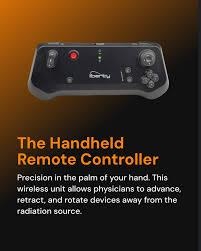
The company’s flagship innovation, the Liberty Endovascular Robotic System, represents a next-generation robotic platform designed to allow physicians to perform vascular interventions remotely from a radiation-shielded workstation. This system integrates:
- Advanced robotic catheter manipulation technology
- Precision navigation algorithms
- Miniaturized mechanical systems for vascular access
- Software-enabled control interfaces for real-time surgical guidance
Microbot Medical’s R&D efforts involve multidisciplinary collaboration among robotics engineers, biomedical scientists, and interventional physicians, ensuring that technological development aligns with real-world clinical requirements.
Manufacturing Facilities
The company operates specialized manufacturing and development facilities designed to support high-precision medical device production and prototyping. These facilities follow stringent quality management systems consistent with international medical device manufacturing standards, ensuring product reliability, safety, and regulatory compliance.
🔆MICROBOT Medical’s LIBERTY® Endovascular Robotic System: A New Direction for Precision Vascular Care in Africa.
In medicine, some innovations improve how we operate,others improve where we can operate safely.
After decades watching the evolution of surgery and image-guided intervention, one unresolved challenge has remained consistent: endovascular procedures demand extraordinary precision while exposing clinicians to cumulative radiation, fatigue, and ergonomic strain. The emergence of robotic endovascular platforms aims to change this balance,and the LIBERTY® system from Microbot Medical introduces an approach that deserves close clinical and economic attention.
This is not simply another robotic platform. It proposes a different model , a single-use, remotely operated system designed to reduce infrastructure barriers while maintaining procedural control.
🔆Clinical Evidence and Performance Signals.
Endovascular robotics as a field has grown from the need to improve catheter navigation precision while reducing operator exposure during fluoroscopy-heavy procedures. Clinical reports from the ACCESS-PVI pivotal trial indicate that robotic navigation using LIBERTY was technically feasible across all enrolled cases, with successful navigation achieved consistently and no device-related adverse events reported in early results. (ir.microbotmedical.com)
One of the most notable findings was a substantial reduction in operator radiation exposure ,reported as approximately 92% relative reduction in comparison settings , a result with direct implications for long-term occupational health in interventional radiology and vascular surgery. (ir.microbotmedical.com)
Regulatory progression further supports translational maturity. The system received U.S. FDA clearance as a single-use robotic platform for peripheral endovascular procedures, signaling acceptance of its safety and performance profile for clinical deployment. (Microbot Medical)
These findings align with broader high-impact literature showing that robotic endovascular systems can improve procedural consistency and reduce operator strain, key factors in complex vascular interventions.
🔆Why This Matters for Nigeria and Africa.
Cardiovascular and peripheral vascular diseases are rising rapidly across Africa due to demographic changes, diabetes prevalence, and urban lifestyle shifts. Yet many interventional centers face:
👉🏻Limited specialist workforce
👉🏻High procedural volumes
👉🏻Staff exposure to cumulative radiation
👉🏻Infrastructure limitations that restrict adoption of large robotic systems
The LIBERTY design philosophy addresses these realities directly.
✅Reduced Radiation Exposure
Interventional teams often accumulate lifetime radiation exposure. Robotic control from a shielded location could significantly improve clinician safety.
✅ Accessibility Without Heavy Infrastructure
Because the system is designed as a disposable unit rather than a large fixed installation, adoption may be more feasible for emerging healthcare markets.
✅ Consistent Navigation
Robotic precision reduces manual variability, which is particularly important as new interventional programs develop across African hospitals.
✅ Expanded Specialist Reach
Remote operation principles suggest future pathways toward collaborative treatment models where expertise can support wider patient populations.
🔆The Return on Investment Perspective.
Hospital executives and investors evaluate technology through measurable outcomes.
LIBERTY presents potential ROI through:
✅Operational Efficiency
Reduced setup complexity and streamlined workflow may support faster procedure turnover.
✅Workforce Sustainability
Lower radiation exposure helps retain interventional specialists over longer careers.
✅Reduced Complication Risk
Improved navigation precision may contribute to fewer procedural errors and associated costs.
✅Differentiation and Referral Growth
Hospitals adopting advanced endovascular robotics position themselves as leaders in minimally invasive vascular care.
This is particularly relevant in regions where patients often travel abroad for advanced interventions.
🔆Why Phinnastads Biomedical Ltd Is Strategically Positioned.
Advanced technology requires more than supply it requires understanding.
Phinnastads Biomedical Ltd combines:
✅Biomedical engineering expertise
✅Clinical insight into procedural workflow
✅Familiarity with African healthcare infrastructure and procurement realities
This intersection allows translation of advanced robotics into practical clinical adoption. Implementation, training pathways, and long-term technical support are as important as the device itself.
For global robotics innovators, partnerships with clinically informed regional organizations provide the confidence needed for expansion into emerging markets.
🔆The Opportunity for Global Partnerships
The endovascular robotics field is still in an early growth phase. Hospitals and distributors that engage now will define standards rather than follow them.
Africa offers:
✅Growing procedural demand
✅Increasing investment in tertiary care
✅Young, technology-oriented specialist communities
Strategic partnerships formed now can establish long-term leadership in one of the world’s fastest-growing healthcare regions.
🔆A Thought-Provoking Clinical Vision.
We can have a future where:
✅Endovascular teams perform complex procedures with significantly reduced radiation burden
✅Smaller hospitals access robotic precision without massive capital upgrades
✅Nigerian centers become regional training hubs for robotic intervention
This is not an abstract vision. It is the logical outcome of combining technological innovation with strategic implementation.
The LIBERTY system signals a shift toward practical robotics systems designed not only for elite institutions but for wider clinical adoption.
For Nigeria and Africa, the opportunity is clear:
👉🏻Better clinician safety
👉🏻Improved procedural precision
👉🏻Sustainable economic value for hospitals
And for Phinnastads Biomedical Ltd, this represents more than procurement ,it is a chance to help shape the future of robotic vascular care across the continent.
#Microbotmedicalliberty #SurgicalRobotics #EndovascularInnovation #MedicalTechnology #RoboticSurgery #HealthcareInnovation #AfricanHealthcare #ClinicalExcellence #FutureOfMedicine #MedicalInnovation #PhinnastadsBiomedicalltd
Contention-Catching Lines Designed to Drive Attention
- “The safest place for the doctor may soon be away from the radiation beam.”
- “Precision navigation is becoming programmable.”
- “Endovascular robotics turns operator fatigue into controlled consistency.”
- “Hospitals that adopt early define tomorrow’s standards.”
- “The future of vascular care will be measured in millimeters and milliseconds.”
🔆The future of vascular intervention is moving from manual navigation to robotic precision.
Emerging clinical evidence in endovascular robotics shows that robotic catheter navigation can improve procedural consistency while reducing operator radiation exposure , a critical advancement for long-term clinician safety. The LIBERTY® Endovascular Robotic System by Microbot Medical represents a new direction in minimally invasive vascular care, combining precision control with practical workflow design.
Why this matters for Nigeria and Africa:
✅ Rising burden of cardiovascular and peripheral vascular disease demands scalable solutions
✅Reduced radiation exposure supports clinician wellbeing and workforce sustainability
✅ Improved navigation precision may enhance patient outcomes
✅Compact robotic solutions can fit evolving healthcare infrastructures
✅ Advanced technology adoption strengthens hospital competitiveness and specialist retention
For healthcare decision-makers, robotic intervention is not only a clinical innovation ,it is an investment in safer care delivery and long-term system efficiency.
Phinnastads Biomedical Ltd bridges biomedical engineering and clinical practice, helping translate advanced surgical technologies into real-world impact across African healthcare environments.
The next era of vascular care will belong to centers that choose precision early.
#Microbotmedicalliberty #SurgicalRobotics #EndovascularInnovation #MedicalTechnology #RoboticSurgery #HealthcareInnovation #AfricanHealthcare #ClinicalExcellence #FutureOfMedicine #MedicalInnovation #PhinnastadsBiomedicalltd

Recent Posts
-
 🚨 THE ROBOT THAT OPERATES WHERE HUMAN HANDS CANNOT 🚨Virtuoso® Surgical Robotics Is Redefining Minimally Invasive Care In Africa
 -
🔆Virtual Incision’s MIRA™ Robotic Surgical System : Clinical Evidence, Healthcare Impact, and Strategic Value for Nigeria and Africa.
-
🔆Titan Medical’s SPORT Single-Port Robotic Surgical System — Clinical Feasibility, Healthcare Transformation, and Strategic Value for Nigeria and Africa
-
🔆Think Surgical, Inc. Orthopedic Robotics for Precision Joint Replacement: Clinical Evidence, Healthcare Impact, and Strategic Value for Nigeria and Africa.
-
🔆The da Vinci Xi Robotic Surgical System and Its Clinical Applications, Global Impact, and Strategic Deployment for Nigeria and Africa


