🔆LARC Robotics and the New Frontier of Precision Urology in Africa: A Clinical and Economic Perspective from Five Decades in Surgical Innovation
The future of surgery rarely arrives with loud announcements.
It enters quietly , in the form of a tool that makes difficult procedures safer, faster, and reproducible
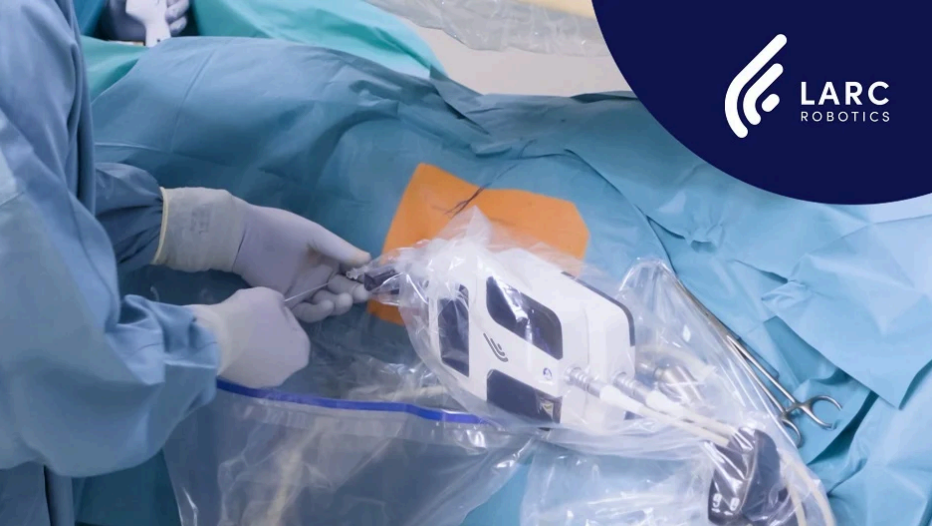
After years observing surgical evolution from open procedures to laparoscopy and robotic assistance, one lesson remains constant: the biggest clinical breakthroughs come when technology solves a real procedural bottleneck. LARC Robotics represents such a solution, particularly for one of the most challenging steps in urologic surgery ,gaining precise renal access during percutaneous nephrolithotomy (PCNL).
🔆Why Renal Access Matters More Than Most People Realize
Kidney stone disease is rising globally, including across Nigeria and Africa, driven by urbanization, dietary shifts, and metabolic conditions. PCNL remains the procedure with the highest stone-free rates, yet global adoption remains surprisingly low because obtaining accurate kidney access is technically demanding and exposes both patient and clinician to radiation.
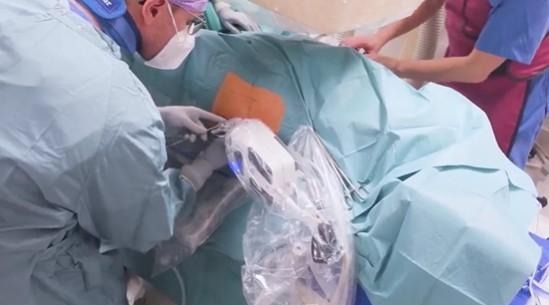
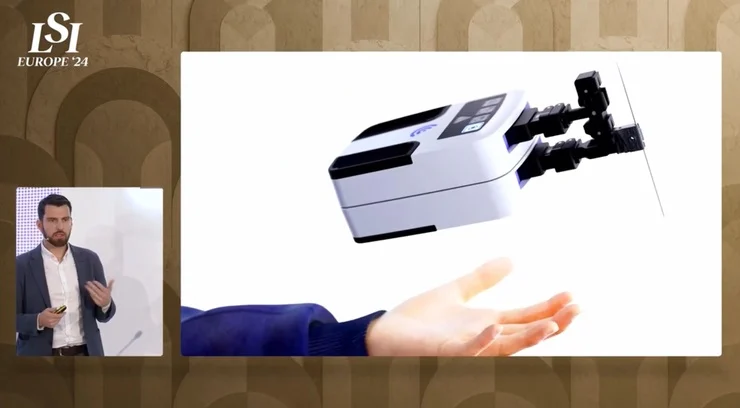
LARC Robotics was developed specifically to address this pain point. Its table-mounted robotic platform assists surgeons in planning, targeting, and executing needle placement under image guidance, simplifying one of the most delicate steps of stone surgery. Clinical development emphasizes enabling urologists to perform access independently rather than relying on interventional radiology workflows, which often increase costs and delay procedures. (larc-robotics.com)
This is not robotics for spectacle ,it is robotics aimed at solving workflow inefficiency.
🔆Clinical Foundations: What the Broader Evidence Tells Us
While LARC focuses on urologic access, evidence from high-impact surgical research on robotic-assisted procedures provides important clinical context:
✅Reduced blood loss compared with conventional minimally invasive approaches
✅Lower postoperative complication rates
✅Improved instrument stability and precision in confined anatomical spaces
✅Enhanced visualization contributing to safer dissection (Frontiers)
These findings explain why robotic systems consistently demonstrate improved perioperative outcomes across specialties.
LARC’s approach applies these principles to PCNL by stabilizing needle trajectory and reducing human variability during targeting , a step directly linked to complications when performed manually.
🔆Why LARC Robotics Is Especially Relevant for Nigeria and Africa
African healthcare systems face unique structural challenges:
✅ Limited subspecialist availability
✅ High procedural volumes in urban tertiary centers
✅ Workflow dependence on scarce interventional radiology support
✅ Pressure to reduce costs while improving outcomes
LARC’s compact design and compatibility with existing imaging tools offer practical advantages:
🟩Shorter Learning Curve for Urologists
The robotic system assists rather than replaces surgeon decision-making, allowing trained urologists to gain renal access with greater consistency.
🟩Reduced Radiation Exposure
Improved targeting means fewer repeat imaging attempts — protecting both staff and patients.
🟩 Faster Theatre Turnover
More predictable access translates into shorter operating times and higher daily case volume.
🟩Improved Stone-Free Outcomes
Precision access increases the likelihood of complete stone removal in a single procedure — a critical benefit where patients often travel long distances for care.
🔆Return on Investment: The Language Decision-Makers Understand
Hospital boards and investors evaluate technology through outcomes and financial sustainability.
LARC Robotics generates value through:
✅ Higher Procedure Capacity
Reduced delays and improved workflow allow more surgeries per theatre day.
✅ Lower Complication Costs
Fewer access-related complications reduce postoperative resource utilization.
✅ Retention of Revenue
Patients who might otherwise seek treatment abroad remain within local healthcare systems.
✅ Competitive Positioning
Hospitals offering robotic-assisted stone surgery become regional referral centers.
Robotics, in this context, becomes an economic tool — not merely a clinical upgrade.
🔆Why Phinnastads Biomedical Ltd Is the Right Implementation Partner.
Technology adoption fails when clinical context is ignored.
Phinnastads Biomedical Ltd sits at a rare intersection:
✅Biomedical engineering capability to manage technical integration
✅Clinical understanding of surgical workflows
✅Familiarity with Nigerian and African healthcare realities
✅Strategic insight into market entry and long-term support
This combination matters because robotic platforms require more than sales; they require training pathways, workflow redesign, and sustained technical reliability.
Phinnastads can translate advanced robotics from concept into daily clinical reality ,a role global manufacturers actively seek when entering emerging markets.
🔆The Opportunity for Global Partnerships
The surgical robotics landscape is expanding rapidly as new players challenge traditional market dominance. Companies looking toward Africa need credible local partners capable of:
✅Clinical education support
✅Regulatory navigation
✅Surgeon engagement
✅Sustainable service infrastructure
Early partnership with organizations like Phinnastads creates a pathway to scale before the market becomes crowded.
The first movers will shape standards.
The late entrants will follow them.
🔆Strategic Vision: Beyond Kidney Stone Surgery
LARC’s model reflects a broader trend in surgical robotics , smaller, task-focused systems that solve specific procedural problems.
This approach aligns perfectly with African healthcare priorities:
✅Targeted technology that improves outcomes immediately
✅Scalable adoption rather than all-or-nothing infrastructure changes
✅Practical robotics for real operating rooms
🔆The Message for Healthcare Leaders.
If your hospital waits for robotics to become commonplace, you will purchase it only to catch up.
If your hospital adopts now, you become the reference center others learn from.
The transition to robotic surgery in Africa is no longer a question of possibility. It is a question of leadership.
LARC Robotics represents a focused, clinically sensible step forward , one that matches the realities of Nigeria and Africa rather than ignoring them.
For Phinnastads Biomedical Ltd, the opportunity is profound:
Not simply to supply a robot,
but to help build the continent’s next chapter in surgical excellence.
#LarcSurgicalRobotics #RoboticSurgery #MedicalTechnology #UrologyInnovation #HealthcareInnovation #AfricanHealthcare #ClinicalExcellence #FutureOfSurgery #DigitalSurgery #PhinnastadsBiomedicalltd
High-Impact Lines Designed to Spark Attention
- “Precision in access means precision in outcomes.”
- “The hardest part of surgery should not depend on luck.”
- “Robotics is not replacing the surgeon — it is removing unnecessary risk.”
- “Hospitals that adopt early set the standard for a generation.”
- “Smarter surgery begins before the first incision.”
🔆Precision begins before the first incision.
Across decades of surgical research, one consistent insight emerges: the accuracy of initial access determines the quality of the entire procedure. In urologic surgery, especially percutaneous nephrolithotomy (PCNL), gaining safe and precise renal access remains one of the most technically demanding steps.
The emergence of robotic-assisted access platforms such as LARC Robotics introduces a new clinical pathway ,one focused on improving targeting accuracy, reducing radiation exposure, and helping surgeons achieve consistent outcomes with greater confidence.
Why this matters for Nigeria and Africa:
✅Rising burden of kidney stone disease requires scalable surgical solutions
✅ More precise access can reduce complications and repeat procedures
✅Improved workflow supports higher surgical capacity in busy hospitals
✅ Shorter procedure times improve operating theatre efficiency
✅Advanced surgical technology helps retain specialist talent and attract regional referrals
For healthcare decision-makers, robotic assistance is not simply about innovation ,it is about measurable clinical improvement paired with sustainable economic returns.
Phinnastads Biomedical Ltd stands at the intersection of clinical knowledge and biomedical engineering, creating a pathway for advanced surgical technologies to move from concept to real patient impact within African healthcare systems.
The question is no longer whether robotics belongs in African surgery.
The real question is: Who will lead the transformation?
#LarcSurgicalRobotics #RoboticSurgery #MedicalTechnology #UrologyInnovation #HealthcareInnovation #AfricanHealthcare #ClinicalExcellence #FutureOfSurgery #DigitalSurgery #PhinnastadsBiomedicalltd
Recent Posts
-
 🚨 THE ROBOT THAT OPERATES WHERE HUMAN HANDS CANNOT 🚨Virtuoso® Surgical Robotics Is Redefining Minimally Invasive Care In Africa
 -
🔆Virtual Incision’s MIRA™ Robotic Surgical System : Clinical Evidence, Healthcare Impact, and Strategic Value for Nigeria and Africa.
-
🔆Titan Medical’s SPORT Single-Port Robotic Surgical System — Clinical Feasibility, Healthcare Transformation, and Strategic Value for Nigeria and Africa
-
🔆Think Surgical, Inc. Orthopedic Robotics for Precision Joint Replacement: Clinical Evidence, Healthcare Impact, and Strategic Value for Nigeria and Africa.
-
🔆The da Vinci Xi Robotic Surgical System and Its Clinical Applications, Global Impact, and Strategic Deployment for Nigeria and Africa


